Showing posts with label major arcana. Show all posts

XXI. The World


Meaning: Completion, success, reward and joy.

Depiction: Older Ishmael, after the events of the book, stands on a beach. This is not the Atlantic shore that he departed at the beginning, but a tropical clime, as you can see by palms in the background.  You can tell he is more experienced; his body is more muscular,  his face slightly lined, his stance is confident, and his forearm is tattooed with a whale skeleton. He faces the ocean, but stands in the opposite direction which he stood as The Fool. It's clear he's about to go to sea again, but it's a new journey.

Text: Chapter 102: A Bower in the Arsacides, and other chapters which refer to older Ishmael.

The skeleton dimensions I shall now proceed to set down are copied verbatim from my right arm, where I had them tattooed; as in my wild wanderings at that period, there was no other secure way of preserving such valuable statistics. But as I was crowded for space, and wished the other parts of my body to remain a blank page for a poem I was then composing—at least, what untattooed parts might remain—I did not trouble myself with the odd inches; nor, indeed, should inches at all enter into a congenial admeasurement of the whale.
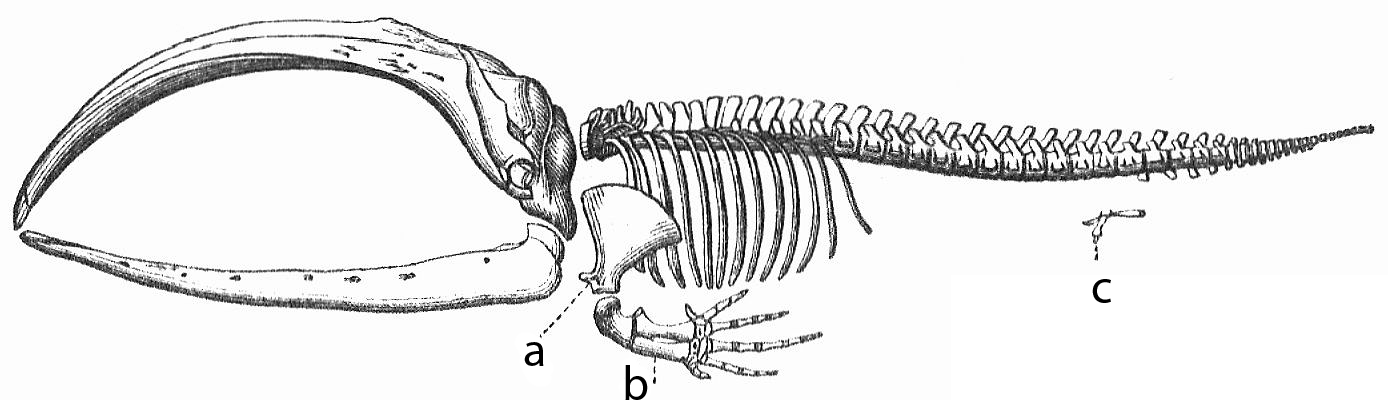

File:Whale skeleton.png - Wikimedia Commons


Comments:
When I read Robin Van Glider's The Beige Moth blog that recaps and discusses Moby Dick, I realized that Ishmael is really two characters: the novice whaler who is a character in the narrative, and the older, wiser sailor who writes it. For all the tragedy in the final chapter, Moby Dick's true ending is more bittersweet. From the biographical bits buried in preceding chapters, we see that Ishmael not only survives, but thrives after his rescue. He has known great sorrow, but also experienced passionate joy and requited love. He has travelled all over the world, and delights in recounting his sea tales to new friends. He's now an old hand at whaling, but is still the lovable literary nerd who writes poetry and continues to be obsessed with everything relating to whales. In short, he is a man in full.

NEXT UP: The Minor Arcana, starting with the Ace of Wands.

XX. Judgement


Meaning: Assessment and letting go of the past. Rebirth and karma.

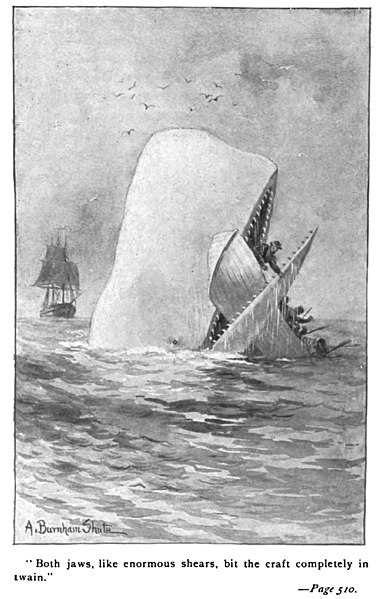
Depiction: That most famous scene in the last chapter where Moby Dick takes out the Pequod with a blow of his forehead, watched by a stunned crew in Ahab's boat and Ishmael swimming alongside it.  The three harpooneers, Queequeg, Daggoo, and Tashtego are at the mastheads, with Tashtego at the top mast, hammer in hand. Everyone still alive at this point knows it's about to be all over.

Text: Chapter 135: The Chase - Third Day
From the ship’s bows, nearly all the seamen now hung inactive; hammers, bits of plank, lances, and harpoons, mechanically retained in their hands, just as they had darted from their various employments; all their enchanted eyes intent upon the whale, which from side to side strangely vibrating his predestinating head, sent a broad band of overspreading semicircular foam before him as he rushed. Retribution, swift vengeance, eternal malice were in his whole aspect, and spite of all that mortal man could do, the solid white buttress of his forehead smote the ship’s starboard bow, till men and timbers reeled.


File:Moby Dick p510 illustration.jpg - Wikimedia Commons

Comments: Here, Moby Dick plays the role of the angel of judgment, and the Pequod crew are the souls whom he calls.

XIX. The Sun


Meaning: Success, happiness, contentment.

Depiction: Pip, pre-madness, sits in repose on the deck of the Pequod, tambourine in hand but not playing.  He looks content- he is enjoying his life at sea and more freedom than he'd have back on land. The sun shines in the sky above him.

Text: Chapter 93, The Castaway
But Pip loved life, and all life’s peaceable securities...


File:John William Godward - Repose, The Flower Girl, 1899.jpg ...
John William Godward. Repose-The Flower Girl (1899)

Comments: Pip is the youngest crew member and a joyful youth until he falls overboard, so he's a good choice for this card. His age is never stated, but I think of him as about 12 - 14; just old enough so that he wouldn't miss his parents (whom we know nothing about). 

XVIII. The Moon


Meaning: Illusion, dreams, and crisis.

Depiction: Daggoo, from the main-mast, spies what he believes to be a whale, but turns out to be a giant squid. We see the squid  swim on one side of the boat, and the tail of a whale on the other side (where Daggoo isn't looking). The moon is visible in the sky.

Text: Chapter 59 - The Squid
It seemed not a whale; and yet is this Moby Dick? thought Daggoo. Again the phantom went down, but on re-appearing once more, with a stiletto-like cry that startled every man from his nod, the negro yelled out- “There! there again! there she breaches! right ahead! The White Whale, the White Whale!”

File:Giant squid catalina2.png - Wikimedia Commons

Comments: A little different from the book in that no actual whale appears in this scene, just the squid, and it takes place in morning, not evening. I included the whale as I wanted to parallel the two animals on the RWS card. No lobster, though.

XVII. The Star


Meaning: Hope, guidance, inspiration and creativity.

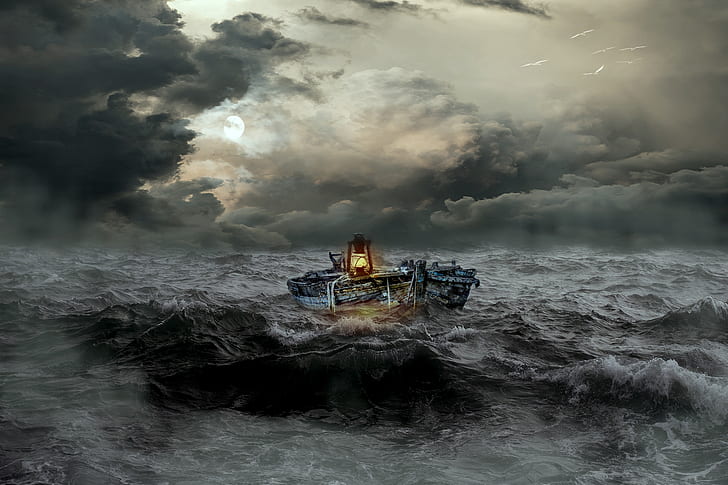
Depiction: Queequeg sits in a whaling boat,  holding a pole with a lit lantern on the end. He is drenched, surrounded by equally soaked crewmates including Starbuck and Ishmael, hoping to be spotted and rescued by the ship. The boat is half filled with water; one of Queequeg's feet is on the floor of the boat, the other leg is bent with his foot on the board that he sits on (replicating the in-and-out of water stance of the RWS figure). A yellow star is in the sky.

Text: Chapter 48: The First Lowering

There, then he sat, holding up that imbecile candle in the  heart of that almighty forlornness. There, then  he sat,  the sign and symbol of a man without faith, hopelessly holding up hope in the midst of despair.

Comments: I had so much trouble with this one! What was really tough was to find a single scene in Moby Dick that represented hope, as it's not a very hopeful book.

Royalty-Free photo: Gray boat on body of water | PickPik

XVI. The Tower


Meaning: Destruction and enlightenment.

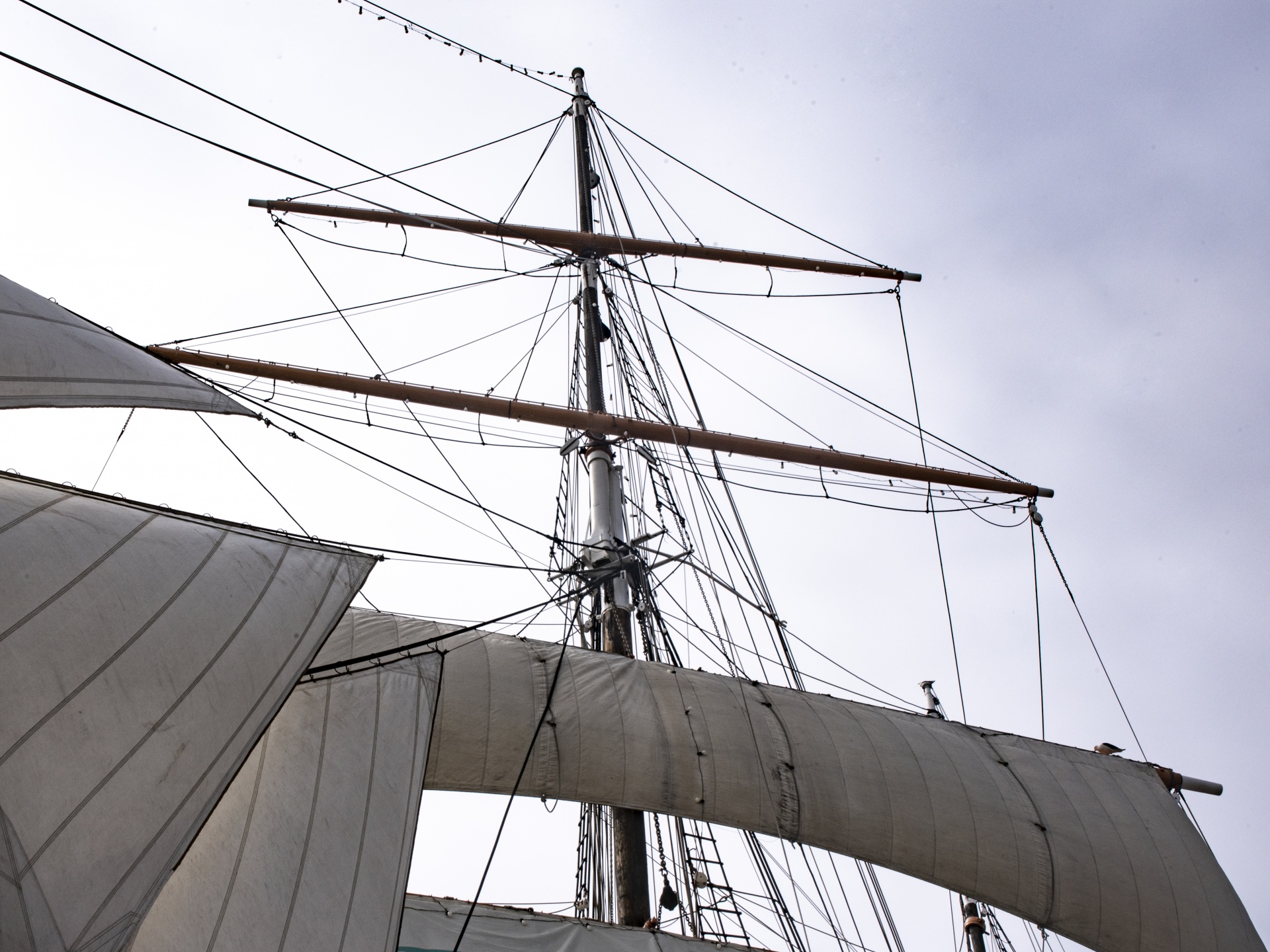
Depiction: Anonymous sailor falling off the mast-head of the Pequod into the sea, in the early hours of the morning.

Text: Chapter 126 - The Life-Buoy

But the bodings of the crew were destined to receive a most plausible confirmation in the fate of one of their number that morning. At sun-rise this man went from his hammock to his mast-head at the fore; and whether it was that he was not yet half waked from his sleep (for sailors sometimes go aloft in a transition state), whether it was thus with the man, there is now no telling; but, be that as it may, he had not been long at his perch, when a cry was heard—a cry and a rushing—and looking up, they saw a falling phantom in the air; and looking down, a little tossed heap of white bubbles in the blue of the sea.

Comments: This was another very easy card to think of, since it almost matches a scene in the book (minus the lightning). The meaning of destruction is (naturally) the sailor's  fall and disappearance in the waves; enlightenment comes from the fact that the crew realizes a new lifebuoy must be created as the old one simply sunk.

Fore Sails On A Ship Free Stock Photo - Public Domain Pictures

XV. The Devil

 
.
Meaning: Enslavement, temptation. And from A.E. Waite: fatality, that which is predestined but is not for this reason evil.

Depiction: The Devil figure here is Ahab. One hand brandishes his flaming lightning-struck harpoon; the other holds a length of rope which is tied loosely around the necks of the crew of the Pequod, like the chains in the RWS card.  We can distinctly see Queequeg and Ishmael in the front, mirroring the couple on the original card (who are also meant to represent The Lovers).

Text: Chapter 119- The Candles

But dashing the rattling lightning links to the deck, and snatching the burning harpoon, Ahab waved it like a torch among them; swearing to transfix with it the first sailor that but cast loose a rope’s end. Petrified by his aspect, and still more shrinking from the fiery dart that he held, the men fell back in dismay, and Ahab again spoke:—

“All your oaths to hunt the White Whale are as binding as mine; and heart, soul, and body, lungs and life, old Ahab is bound. And that ye may know to what tune this heart beats; look ye here; thus I blow out the last fear!” And with one blast of his breath he extinguished the flame.


Comments: Another card that fits Moby Dick so well. Ahab has the fate of the entire crew in his hands, and he has persuasively bound them to his monomaniacal quest to avenge himself against Moby Dick. The sailors are fatalistic; Ishmael writes his will, Starbuck cannot stir himself to active resistance.
HD wallpaper: distress, forward, ship, sea, storm, ocean, lake ...


XIV. Temperance


Meaning: Balance, peace, patience and moderation.

Depiction: Captain Boomer,  the British captain who lost his hand to Moby Dick and now wants nothing more to do with him. This card shows Boomer on the deck of the Samuel Enderby, looking content, his whalebone mallet hand clearly visible, as Moby Dick's white tail retreats.

Text:  Chapter 100, Leg and Arm

“No, thank ye, Bunger,” said the English Captain, “he’s welcome to the arm he has, since I can’t help it, and didn’t know him then; but not to another one. No more White Whales for me; I’ve lowered for him once, and that has satisfied me. There would be great glory in killing him, I know that; and there is a ship-load of precious sperm in him, but, hark ye, he’s best let alone; don’t you think so, Captain?”—glancing at the ivory leg.

Comments: This is a challenging one. But I think Captain Boomer's wise forbearance from joining in Ahab's monomaniacal style of vengeance best embodies the spirit of the card.

Alternate Depiction: Aunt Charity, Bildad's sister, seems like a good choice because she is literally all about temperance, doing everything she can to prevent alcohol consumption aboard ship.

Free Images : work, hand, rope, wing, technology, cable, steel ...

XIII. Death


Meaning: Mortality, transformation, and change.

Depiction: Queequeg's coffin, empty and open, sits on the deck of the Pequod.  In the foreground, we see anonymous sailors engaged in work, oblivious to the fate that awaits them all.

Text: Chapter 110- Queequeg In His Coffin
Now, when this strange circumstance was made known aft, the carpenter was at once commanded to do Queequeg’s bidding, whatever it might include. There was some heathenish, coffin-coloured old lumber aboard, which, upon a long previous voyage, had been cut from the aboriginal groves of the Lackaday islands, and from these dark planks the coffin was recommended to be made.

Waka Taua - War Canoe | A Maori war canoe (Waka Taua) in the… | Flickr

Alternate Depiction: Whale skeleton lying in a glen of tropical palm trees. Smoke emits from its spout from the "unextinguished aromatic flame" tended by local priests (Chapter  102 - A Bower in the Arsacides). I loved the idea of this image, but it really isn't as salient and memorable as Queequeg's coffin (which ends up being Ishmael's salvation). And it doesn't really make you think of death - it's more like a religious relic.

XII. The Hanged Man


Meaning: Waiting, sacrifice, and enlightenment.

Depiction: Ishmael playfully hanging in the rigging on a slow day, showing off his balancing skills.

Text:  Chapter 35- The Mast Head. Ishmael admits that he "kept a sorry guard" and spent his  much of his watch time dreaming atop the mast.

For one, I used to lounge up the rigging very leisurely, resting in the top to have a chat with Queequeg, or anyone else off duty who I might find there; then ascending a little way further, and throwing a lazy leg over the topsail yard, take a preliminary view of the watery pastures, and so at last mount to my ultimate destination.

Comments: Waiting is also a good way to describe Ishmael. He takes a very passive role of chronicler; nothing he does influences the fate of the Pequod.

Ishmael and Queequeg hanging out in the rigging, posted by madebyken on Tumblr, 2013. Unclear if "Ken" is the original artist- if not, I will credit here once known.


XI. Justice


Meaning: Decisions, balance, legal affairs.

Depiction: The Pequod, balanced by the head of a right whale on the starboard side and that of a sperm whale on the port or larboard side.

Text: Chapter 73-  Stubb and Flask Kill a Right Whale, and Then Have a Talk Over Him (also several ensuing chapters all about the two whales' heads!)

“Didn’t I tell you so?” said Flask; “yes, you’ll soon see this right whale’s head hoisted up opposite that parmacetti’s.”

In good time, Flask’s saying proved true. As before, the Pequod steeply leaned over towards the sperm whale’s head, now, by the counterpoise of both heads, she regained her even keel; though sorely strained, you may well believe. So, when on one side you hoist in Locke’s head, you go over that way; but now, on the other side, hoist in Kant’s and you come back again; but in very poor plight. Thus, some minds for ever keep trimming boat. Oh, ye foolish! throw all these thunder-heads overboard, and then you will float light and right.


Comments: I am not 100% sure about the choice of this image. Yes, the whales' heads serve to balance the ship, but Ishmael observes that the burdened craft would float even better if both heads were simply thrown overboard.

File:Sperm whale skeleton, AHWS, 2018 (01).jpg - Wikimedia Commons
Sperm whale head and spinal column/Wikimedia Commons

X. Wheel of Fortune


Meaning: Fate, change, intuition.

Depiction: The tiller of the Pequod, made from a whale jawbone.

Text: Chapter 16- The Ship
Scorning a turnstile wheel at her reverend helm, she sported there a tiller; and that tiller was in one mass, curiously carved from the long narrow lower jaw of her hereditary foe.

Comments: Yes, a ship's wheel would have been a much better image for this, but the Pequod didn't have a wheel. This is one of those things you just have to go with.

Ficheiro:Rumpel.JPG – Wikipédia, a enciclopédia livre

Alternate Depiction:  Queequeg and Ishmael weaving a sword mat together (Chapter  47- The Mat Maker).  The problem with this image is that you would have no way of reading this card by image alone. But it makes so much sense in the context of the book.  As they weave, Ishmael imagines that he's a shuttle weaving fate at the "Loom of Time," and that the movement of Queequeg's sword  shaping the mat fabric is a combination of chance,  free will, and necessity "all interweavingly working together."

Photo effect 1080P, 2K, 4K, 5K HD wallpapers free download ...

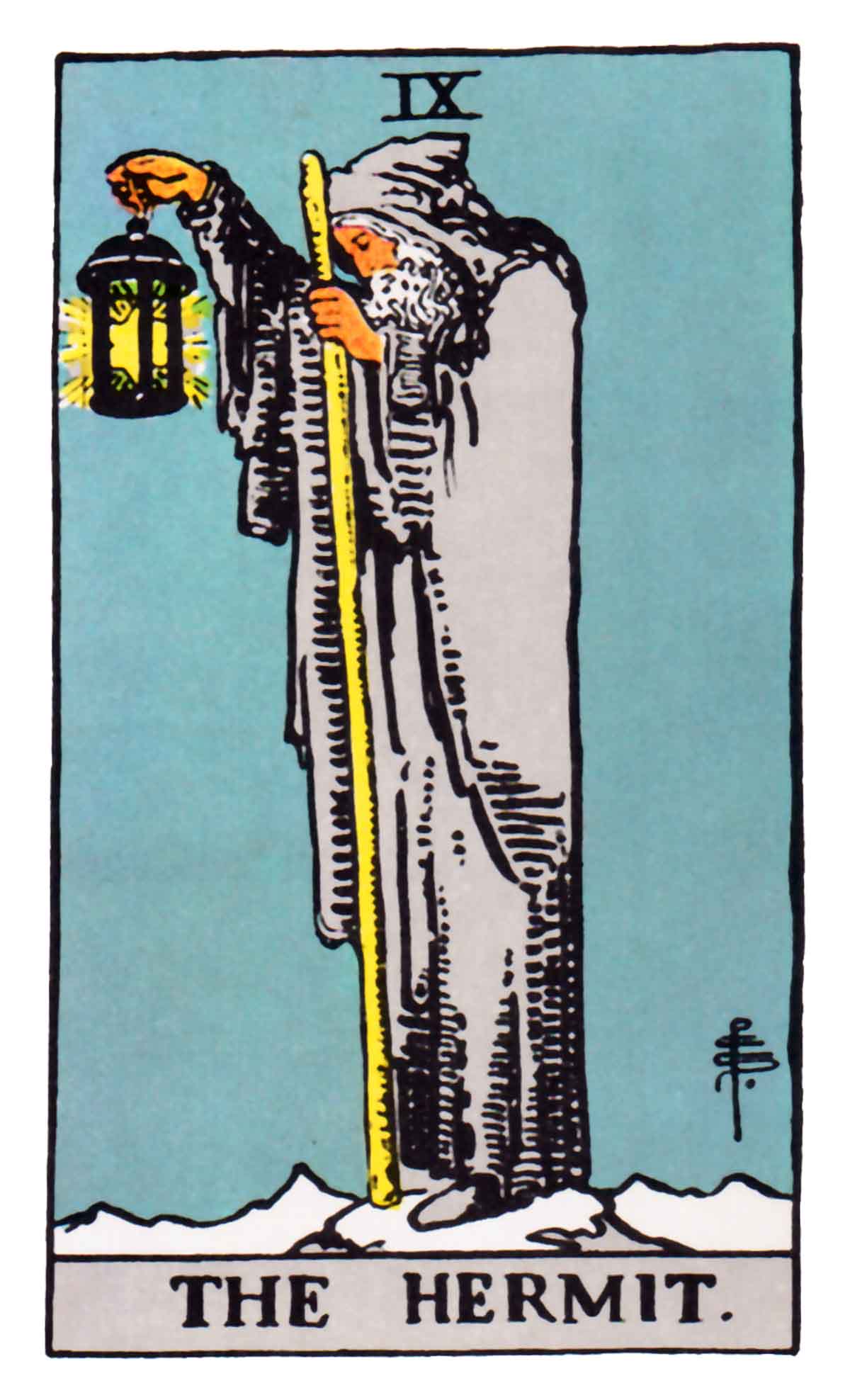
IX.The Hermit


The Hermit Tarot Card Meaning in Readings: Isolation

Meaning: Healing and self-exploration.

Depiction: Ahab poring over his nautical charts, "in the solitude of his cabin," the "heavy pewter lamp" swinging over his head, illuminating the creases of his maps and the scars on his forehead.

My spouse, being a wonderful person and a talented artist in his own right, created original art for this card! Here it is.


Text: Chapter 44 - The Chart

While thus employed, the heavy pewter lamp suspended in chains over his head, continually rocked with the motion of the ship, and for ever threw shifting gleams and shadows of lines upon his wrinkled brow, till it almost seemed that while he himself was marking out lines and courses on the wrinkled charts, some invisible pencil was also tracing lines and courses upon the deeply marked chart of his forehead.

But it was not this night in particular that, in the solitude of his cabin, Ahab thus pondered over his charts. Almost every night they were brought out; almost every night some pencil marks were effaced, and others were substituted. For with the charts of all four oceans before him, Ahab was threading a maze of currents and eddies, with a view to the more certain accomplishment of that monomaniac thought of his soul.


Alternate Depiction: Elijah, relaying his prophecies (Chapter 19-The Prophet). Technically very hermit-like in appearance .... but his character doesn't correspond to the actual meaning of this card. Sorry, Elijah! Maybe you'll find a place in the Minor Arcana.

A plat of all the world | Zoom into this map at maps.bpl.org… | Flickr
Edward Wright, 1655/maps.bpl.org

VIII. Strength


95 Best Strength (Tarot) images | Strength tarot, Tarot, Tarot cards 

Meaning: Patience, tension, and strength.

Depiction: From the gunwale of the Pequod, Queequeg gently pats a whale on the forehead. As in the original card, and the Magician as well, the infinity sign floats over his head.

Text: Chapter 87-The Grand Armada

I mention this circumstance, because, as if the cows and calves had been purposely locked up in this innermost fold; and as if the wide extent of the herd had hitherto prevented them from learning the precise cause of its stopping; or, possibly, being so young, unsophisticated, and every way innocent and inexperienced; however it may have been, these smaller whales—now and then visiting our becalmed boat from the margin of the lake—evinced a wondrous fearlessness and confidence, or else a still becharmed panic which it was impossible not to marvel at. Like household dogs they came snuffling round us, right up to our gunwales, and touching them; till it almost seemed that some spell had suddenly domesticated them. Queequeg patted their foreheads; Starbuck scratched their backs with his lance; but fearful of the consequences, for the time refrained from darting it.

Comments: This might be the only scene in the entire book that could even remotely be described as cute. It's a good analogue for the card: like the lion, this "suddenly domesticated" whale is capable of causing great damage, yet allows this affectionate touch.

Petting a Whale | Michael R Perry | Flickr
Michael R. Perry/Flickr

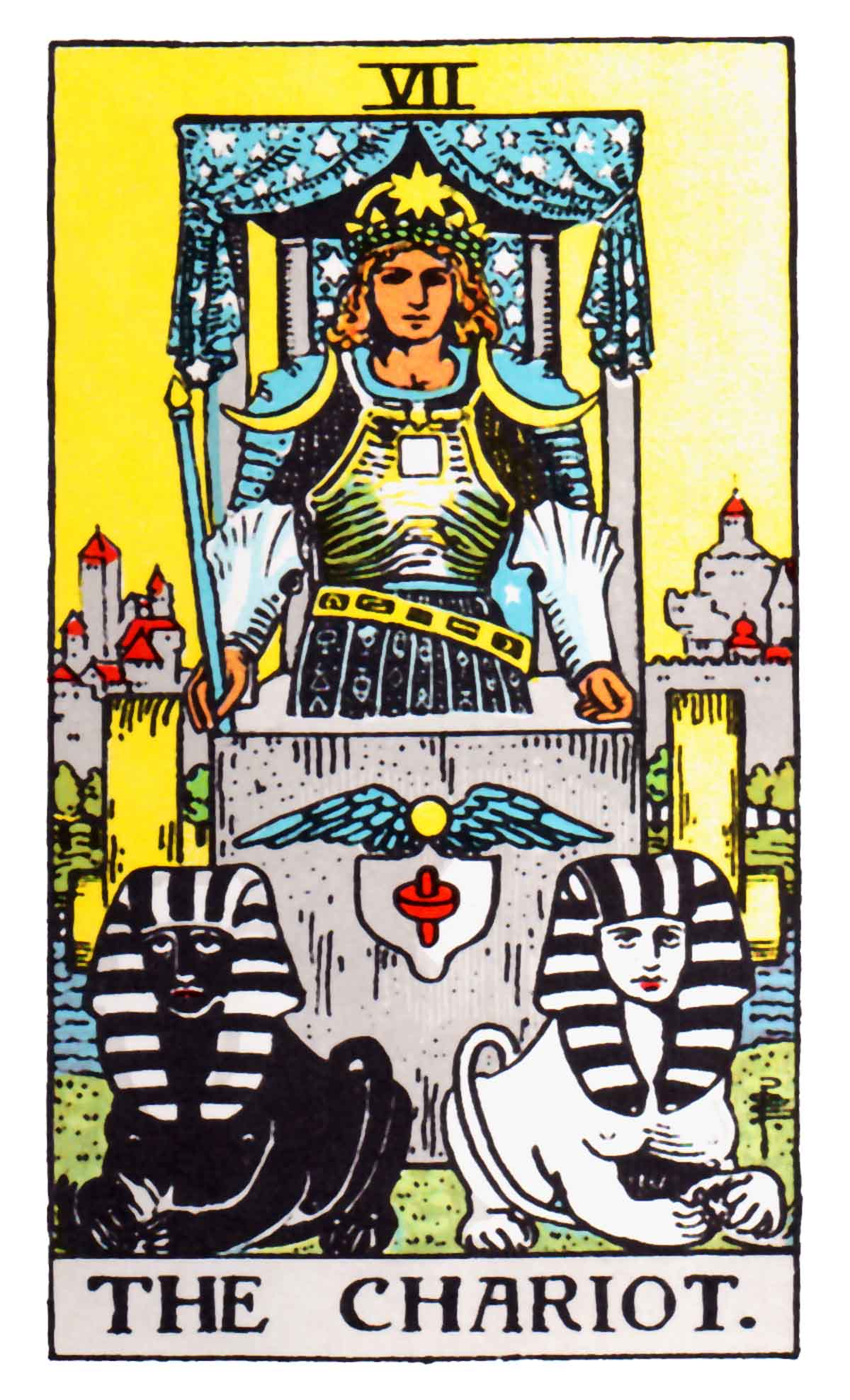
VII. The Chariot


Meaning: Determination, victory, and a journey

Depiction: Whale boat being towed by a harpooned whale. Whale in foreground, indistinct sailors in background.

Text: Oh, in lots of places, given that this is a book about whaling. Let's say Chapter 73- Stubb and Flask Kill a Right Whale; and Then Have a Talk Over Him.

An interval passed and the boats were in plain sight, in the act of being dragged right towards the ship by the towing whale.

Comments: Another obvious choice. Although it lacks the multiple symbols of the RWS version, it gets the same point across.

File:FMIB 35832 Towed by a Whale.jpeg

V. The Lovers


Meaning:  Love and relationships, decisions

Depiction: Queequeg and Ishmael in their bed at the Spouter Inn, facing each other, deep in intimate conversation. Behind their bed is a window through which we see the stormy sea, and from that the distant form of a leaping whale. As whaling is what brings these two men together, the image of the whale here stands in for the angel in the original RWS card, who is meant to be the priest who unites the two figures in marriage. And indeed, they are "henceforth" declared married by Queequeg in Chapter 10, and described as "wedded" again in Chapter 72 (The Monkey-Rope).


My husband decided to illustrate this card. He was aiming at depicting a rather dreamlike state rather than the bed at the Spouter Inn. Also, doesn't Ishmael look like Kris Kristofferson here?  

Moby Dick — writing about sex — novelist's thoughts: Rachel ...
Illustration from Moby Dick, Rockwell Kent, 1930

Text: Chapter 10- A Bosom Friend;  and Chapter 11- Nightgown

How it is I know not; but there is no place like a bed for confidential disclosures between friends. Man and wife, they say, there open the very bottom of their souls to each other; and some old couples often lie and chat over old times till nearly morning. Thus, then, in our hearts’ honeymoon, lay I and Queequeg—a cosy, loving pai
r.

Illustration by David Peloquin, date unknown.
Comments:  There is a perennial debate about whether Ishmael and Queequeg's relationship was meant to be romantic or simply deep, non-erotic kinship. In a tarot reading, this card could be either, especially since not all persons seeking a reading are in a love relationship or looking for romance.  However,  there is no shortage of textual and biographical information to suggest that Melville really did intend to imply a physical as well as intellectual relationship between these characters- the love he longed for, but dared not express, at least not openly.
From that hour I clove to Queequeg like a barnacle. Ch. 13- Wheelbarrow/Moby Dick (2011) Starz-Encore

V. The Hierophant


Meaning: Leadership, tradition, education.

Depiction: Starbuck, standing on the deck of the Pequod and gazing thoughtfully over the side.

Text: Chapter 26, Knights and Squires
A staid, steadfast man, whose life for the most part was a telling pantomime of action, and not a tame chapter of sounds. Yet, for all his hardy sobriety and fortitude, there were certain qualities in him which at times affected, and in some cases seemed well nigh to overbalance all the rest. Uncommonly conscientious for a seaman, and endued with a deep natural reverence, the wild watery loneliness of his life did therefore strongly incline him to superstition; but to that sort of superstition, which in some organizations seems rather to spring, somehow, from intelligence than from ignorance.

An unsigned painting of a 19th C. American whaling ship ...
Unsigned painting of 19th century whaling ship/Pinterest
Comments: Liz Dean's Ultimate Guide to Tarot describes the Hierophant as  "the bridge between heaven and earth." Starbuck is the bridge between land and sea: for him, the business of whaling is tied only to the profits it brings on land. He tries (and fails) to anchor Ahab in the practical world of business and responsibility.

IV. The Emperor


The Emperor (Tarot card) - Wikipedia

Meaning: Order, power, boundaries.

Depiction: Old Captain Peleg, as Ismael first encounters him, sitting in his oaken chair in his whalebone "wigwam" behind the mainmast.

Text: Chapter 16, The Ship
And half concealed in this queer tenement, I at length found one who by his aspect seemed to have authority; and who, it being noon, and the ship’s work suspended, was now enjoying respite from the burden of command. He was seated on an old-fashioned oaken chair, wriggling all over with curious carving; and the bottom of which was formed of a stout interlacing of the same elastic stuff of which the wigwam was constructed.

There was nothing so very particular, perhaps, about the appearance of the elderly man I saw; he was brown and brawny, like most old seamen, and heavily rolled up in blue pilot-cloth, cut in the Quaker style; only there was a fine and almost microscopic net-work of the minutest wrinkles interlacing round his eyes, which must have arisen from his continual sailings in many hard gales, and always looking to windward;—for this causes the muscles about the eyes to become pursed together. Such eye-wrinkles are very effectual in a scowl.

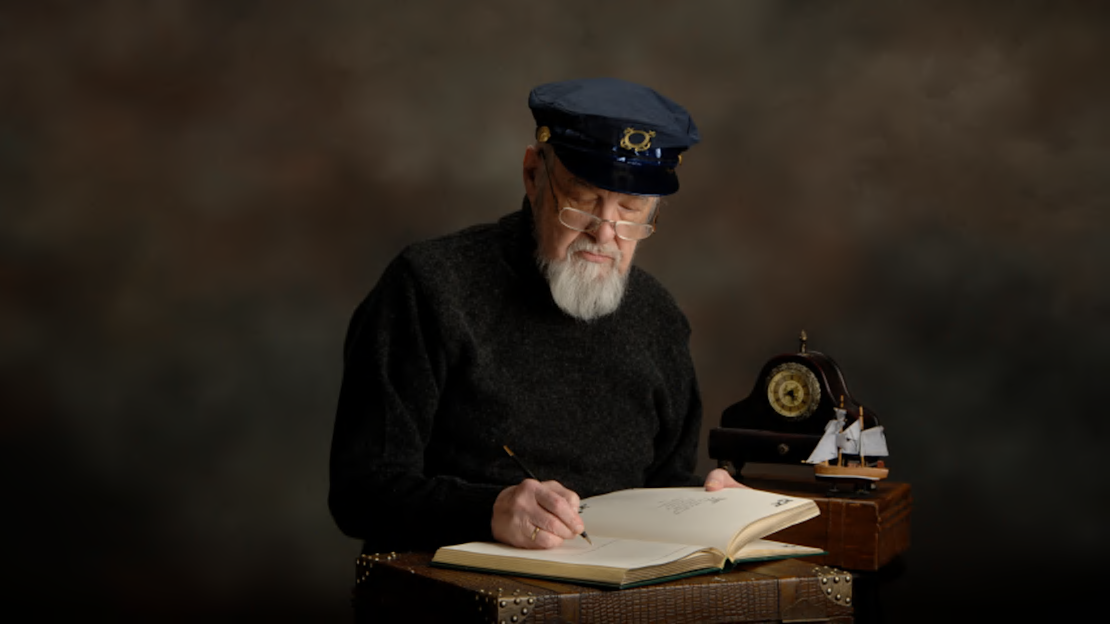
Know Your Famous Captains | Online Quiz | Mental Floss

Comments: I originally had both Peleg and Bildad for this card, but their personalities are so different, it seemed better to separate them. You'll find Bildad as the King of Pentacles.


III. The Empress


3 The Empress | The Empress sits on a cushioned throne in a … | Flickr 


Meaning: Creativity, resources, fertility

Depiction: Queequeg, swimming underwater , pulls Tashtego out  from below the submerged whale's head through the hole he has cut. He has his sword in one hand, his other hand is dragging Tashtego out by the hair (ouch, but that's how it's written), Tashtego's head, emerging from the whale.

Text: Chapter 78, Cistern and Bucket
Why, diving after the slowly descending head, Queequeg with his keen sword had made side lunges near its bottom, so as to scuttle a large hole there; then dropping his sword, had thrust his long arm far inwards and upwards, and so hauled out poor Tash by the head. He averred, that upon first thrusting in for him, a leg was presented; but well knowing that that was not as it ought to be, and might occasion great trouble;—he had thrust back the leg, and by a dexterous heave and toss, had wrought a somerset upon the Indian; so that with the next trial, he came forth in the good old way—head foremost.
Frank Stella (b. 1936) | Cistern and Buckets | 20th Century ...
Frank Stella, Cistern and Buckets (1990)
Comments: This scene, with its express metaphor of midwifery, is perfect for the Empress. Queequeg, always the initiator, uses his creativity to rescue and symbolically rebirth Tashtego after his near-drowning inside the  head of the whale. 


.


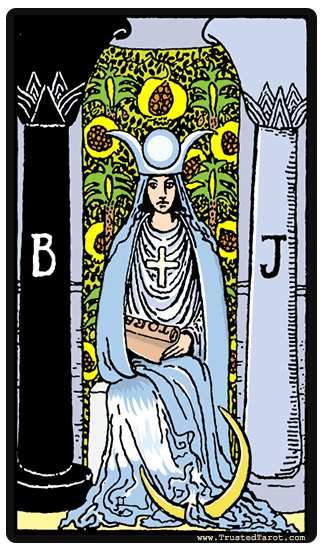
II.The High Priestess


The High Priestess Tarot Card Meaning

Meaning: Secrets, intuition and learning.

Depiction: Ahab's harpooneer Fedallah, about to reveal his prophecy. He's crouched on the bow of the Pequod at night. In the waves before him, we see the top of a dead whale, pole stuck in its blowhole topped by a lit lantern, encircled by sharks.

Text: Chapter 117- The Whale Watch

The waif-pole was thrust upright into the dead whale’s spout-hole; and the lantern hanging from its top, cast a troubled flickering glare upon the black, glossy back, and far out upon the midnight waves, which gently chafed the whale’s broad flank, like soft surf upon a beach.

Ahab and all his boat’s crew seemed asleep but the Parsee; who crouching in the bow, sat watching the sharks, that spectrally played round the whale, and tapped the light cedar planks with their tails.

Comments: Although Melville was notably progressive for his time in some respects, Moby Dick contains some historically typical racist language and stereotypes. Fedallah, the second prophet in the book, doesn't get to be much more than a phantasmic caricature of mystical, inscrutable Orientalism, his single conversation limited to sharing his prophetic dream of doom.  His connection to the subconscious makes him an appropriate figure for this card.

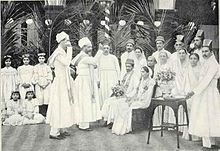
Parsis - Wikipedia


Alternate Depiction: Ahab, in his quarters, seated, eyes closed, rapt in thought.  He is constantly pondering metaphysics and questioning the nature of reality: he demands to "strike through the mask" of human perception (Chapter 36- The Quarter-Deck).  Also, though he initially relies on charts and navigational equipment like the quadrant to track his prey, ultimately Ahab relies on his own instinct. See below for an image from the 2011 television miniseries (which obviously would NOT be copied for a tarot deck!) that is quite evocative of the High Priestess.

William Hurt as Ahab in the 2011 miniseries of Moby Dick/Starz Encore